Date of publication: 12.08.2026 . Author: ploan.ph
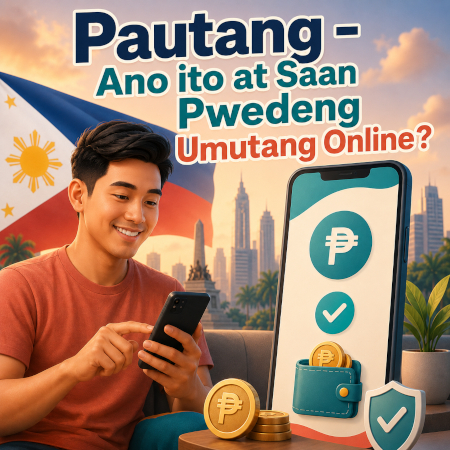 Table of Contents
Kailangan mo ng pautang at gusto mong mag-apply online? In the Philippines, you can now apply for different types of loans through lending apps, digital banks, and online banking platforms. But before borrowing, check who operates the service, how much the loan will really cost, and whether you can repay it on time.
Pautang is a common Filipino term related to lending money. In everyday conversation, Filipinos use several closely related words:
For example:
“Saan pwedeng umutang?” means “Where can I borrow money?”
“May pautang ba online?” means “Can I borrow money online?”
When people search for pautang online, pautang pera, or a pautang app, they are usually looking for a quick way to borrow through a phone or website rather than visiting a physical lending office.
Online access can make applying more convenient, but it does not change the basic rule: a loan is money that must be repaid according to an agreement, usually with interest and/or other disclosed charges.
There are several places where borrowers can look for online credit in the Philippines.
Online lending apps are designed specifically for digital borrowing. Registration, identity verification, application, approval, and loan management may all take place through the app or website.
These services are often used for relatively small or short-term loans, although amounts and repayment periods vary considerably.
Some digital banks offer personal loans or credit products directly inside their mobile apps.
They may have different eligibility requirements from short-term lending companies and can use their own credit assessment procedures.
Many traditional Philippine banks now allow customers to start or complete personal loan applications online.
Bank loans may be suitable when you need a larger amount or a longer repayment period, although documentation and eligibility requirements can be more extensive.
Some employees may also have access to salary-based lending products through employers, banks, cooperatives, or financing providers.
The right option depends on how much you need, how quickly you need it, your income, the repayment period, and the total cost of the loan.
There is no single best pautang app for every borrower. One lender may offer a suitable short-term loan to one applicant while another person may qualify for different terms—or may not qualify at all.
Popular online lenders in the Philippine market differ in:
PLoan maintains a separate updated comparison of online lenders. See our guide Best Legit Loan Apps in the Philippines for current options, requirements, loan amounts, and repayment terms.
Do not choose an app only because it advertises “fast approval” or a high maximum loan amount. What matters is the offer you personally qualify for and how much you will have to repay.
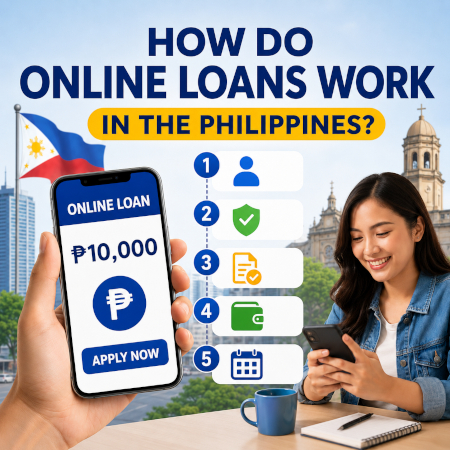
The basic process is usually:
Choose a lender → Register → Verify your identity → Apply → Wait for a decision → Review the offer → Receive the money → Repay
Most lenders ask for personal details and identity verification before making a decision. Some also request information about employment, income, or other financial circumstances.
Approval is not guaranteed, and the amount you request may differ from the amount ultimately offered.
For a detailed explanation of registration, KYC, approval, disbursement, and repayment, read our complete guide How Online Loans Work in the Philippines.
Iba-iba ang requirements ng bawat lender. There is no single list that applies to every pautang app.
Typical requirements may include:
Some lenders require proof of income, while others use different verification methods.
A claim such as “valid ID lang, sure approved” should not be treated as a guarantee. Even if an ID is the main document requested, the lender can still assess your eligibility and reject the application.
The amount you can borrow through a pautang app depends on the provider and its assessment of your application.
Factors may include:
The maximum amount shown on a lender's website is not necessarily the amount available to every applicant.
For example, an app may advertise loans “up to ₱50,000,” but a first-time borrower could receive an offer for a much smaller amount.
Maximum available loan ≠ guaranteed loan amount.
Do not borrow more simply because the lender offers it. Base the amount on what you actually need and can repay.
Online borrowing can be faster than a traditional paper-based application, but three different stages are often confused.
This is the time needed to complete the application form and upload the required information.
This is how long the lender needs to evaluate the application and decide whether to approve it.
This is how long it takes for approved funds to actually reach your bank account, e-wallet, or another supported receiving method.
These times are not the same.
A lender that advertises a decision “in minutes” is not necessarily promising that cash will appear in your account within the same number of minutes. Identity checks, additional review, receiving-bank processing, incorrect details, maintenance, or other factors can delay disbursement.
Mabilis ang application does not always mean instant ang pera.
One of the most important mistakes to avoid is comparing loans only by the advertised interest rate.
You should look at the entire transaction:
Loan principal → Amount actually received → Interest and fees → Total repayment
Under the Philippine Truth in Lending Act, creditors must disclose finance charges and the cost of credit before the transaction is consummated so borrowers can understand what the credit actually costs.
Before accepting a pautang offer, check:
Suppose a loan has a principal of ₱10,000.
If disclosed charges are deducted before disbursement and only ₱9,400 reaches your account, you should not evaluate the loan as though you actually received ₱10,000 in cash.
Compare:
₱9,400 actually received
with
the full amount you are required to repay.
The figures above are only an example of how to compare net proceeds and repayment; they are not representative rates or fees for a specific lender.
Choosing a lender is more important than finding the fastest application button.
Find the legal company name behind the service.
An app name, Facebook page, or website brand may be different from the registered corporate name of the lender.
In the Philippines, lending and financing companies are regulated by the Securities and Exchange Commission.
The SEC maintains resources for lending and financing companies, including information on recorded online lending platforms and enforcement actions.
Look for:
Being registered as a corporation alone should not be confused with having authority to conduct lending or financing activities.
Do not choose between two loans simply because one headline interest rate looks lower.
Check what you will actually receive and what you will actually have to pay back.
A small loan can still be difficult to repay if the due date is too close.
Ask:
“May enough ba akong pera sa due date?”
If the answer is uncertain before you even borrow, reconsider the amount or loan.
Make sure you understand:
Never send repayment to an unexplained personal account simply because someone contacted you through SMS, Messenger, WhatsApp, or Telegram.
A legitimate lender should provide identifiable official channels for customer concerns.
Save the official:
This is especially useful if a payment is not posted correctly or you need to discuss a repayment problem.
A professional-looking mobile app does not prove that the company behind it is legitimate.
Look for:
Be cautious if you see:
One particularly dangerous pattern is the advance-fee loan scam.
Someone may tell you that your loan is already approved but you first need to send money for:
After the borrower sends the payment, the promised loan may never arrive. The scammer may then request another payment.
Do not confuse this with legitimate fees that are clearly disclosed as part of an actual credit agreement.
If an unfamiliar lender asks you to send money to a private account before releasing a supposedly approved loan, verify the company independently before paying anything.
This is one of the biggest privacy concerns associated with online lending.
A lender does not have unrestricted permission to collect and use everything stored on your phone merely because you installed its app.
The National Privacy Commission has stated that unnecessary permissions can include accessing or harvesting phone contacts, email lists, or social-media contacts for debt collection or harassment.
NPC rules were also amended to address personal-data processing during loan applications, loan servicing, collection, character references, and guarantors.
A joint SEC-NPC-DICT advisory issued in March 2026 reiterated privacy requirements for online lending platforms and rules concerning the use of borrowers' personal data.
Before allowing access to anything on your phone, check:
Access to a camera for identity verification is different from unrestricted harvesting of your contact list.
If this is your first online loan, focus less on how quickly you can get approved and more on whether the debt will be manageable.
If you need ₱5,000 and qualify for more, that does not mean you should take the maximum amount.
Borrow based on your need, not your available limit.
Do not stop at:
“Magkano ang interest?”
Also ask:
“Magkano lahat ang babayaran ko?”
Two offers with the same principal can have different fees and repayment schedules.
Match the payment date to your actual cash flow.
If you get paid on the 30th but your loan is due on the 25th, you already have a repayment problem built into the loan.
Applying to many lenders at once can make it harder to control your borrowing.
If several loans are approved and accepted, you may end up managing multiple:
One loan should not automatically become a reason to take another one.
Keep a screenshot, email, or downloadable copy of:
Do not rely entirely on information displayed temporarily inside an app.
Never give anyone your:
An OTP sent specifically to verify registration with a lender is different from an OTP authorizing access to, or a transaction from, your bank or e-wallet account.
Read every OTP message before entering or sharing the code.
If you think you will miss a payment, contact the lender before the due date when possible.
Ask for:
Do not assume that an extension is automatic. It depends on the lender and the agreement.
Late payment may lead to:
However, owing money does not allow a lender or collector to use unfair collection practices. The SEC continues to list Memorandum Circular No. 18, Series of 2019, on the prohibition of unfair debt collection practices for financing and lending companies.
Taking another short-term loan solely to repay an existing one can also make the situation worse by moving the debt rather than solving the cash-flow problem.
Keep evidence before making a complaint.
Useful records include:
For issues involving lending or financing companies, unauthorized lending activity, or complaints involving regulated lenders, the SEC operates its official I-Message platform for public inquiries and complaints.
Privacy concerns may fall under the NPC when they involve misuse of personal information, excessive data collection, contact-list abuse, or disclosure of personal data.
If you are dealing with threats or suspected criminal fraud, the circumstances may also justify reporting the matter to the appropriate law-enforcement authorities.
Pautang refers to lending money or money offered as a loan. Utang means a debt or borrowed money, while umutang means to borrow. In online searches, “pautang” commonly refers to cash loans available through lending apps or websites.
You can look at online lending companies, financing companies, digital banks, and banks offering digital loan applications. Before applying, identify the legal company behind the service and verify its regulatory information.
There is no single app that is best for everyone. A legitimate lender should be operated by an identifiable company with the appropriate regulatory status and clear loan terms. PLoan's updated guide compares legit loan apps available in the Philippines.
Check the legal company name, SEC information, Certificate of Authority where applicable, official website and support channels, privacy policy, and loan agreement. Do not rely only on the app name or an advertisement.
Requirements depend on the lender. Common requirements include an active mobile number, personal details, valid government-issued ID, identity verification, and sometimes employment or income information.
Some lenders have relatively simple documentation requirements, but a valid ID alone does not guarantee approval. The lender can still verify your identity, evaluate your information, and decide whether you meet its eligibility criteria.
Yes. Some lenders accept first-time borrowers. However, the amount available to a new customer may differ from the advertised maximum, and every application remains subject to approval.
It depends on the lender. Some lenders request proof of income while others may use other information to assess an applicant. Check the requirements of the specific service instead of assuming that every pautang app works the same way.
There is no standard approval time. Some lenders use automated systems that can provide a quick decision, while other applications need additional or manual verification.
Approval and disbursement are separate stages. Even after approval, the actual transfer can depend on the lender, receiving bank or e-wallet, verification status, and payment-system processing.
Loan limits vary by provider and borrower. Income, repayment capacity, previous history, current obligations, and the lender's internal assessment can affect the amount offered. The maximum advertised amount is not guaranteed.
No legitimate credit assessment can guarantee approval for every applicant. Be cautious with services advertising “100% guaranteed approval,” especially if they also demand an upfront payment before releasing the loan.
Identity documents and selfies may be required for legitimate verification purposes, but provide them only through the official channel of a lender you have checked. Read the privacy notice and avoid sending identity documents to unknown people through private messaging accounts.
A lending app does not have unrestricted rights to harvest and use your contacts. Philippine privacy rules restrict unnecessary data processing and prohibit abusive use of contact information for debt collection and harassment.
You may face late charges according to the agreement, collection activity, difficulty obtaining future credit, and possible credit-reporting consequences. Contact the lender early if you expect payment problems and ask whether a formal repayment arrangement is available.
Save screenshots, messages, agreements, receipts, phone numbers, and company details. Complaints relating to lending and financing companies can be submitted to the SEC, while complaints involving misuse of personal data may be brought to the National Privacy Commission. The SEC's I-Message system accepts public complaints and inquiries.
Interest |
Loan amount |
Term |
Borrower age |
SEC registered |
||
|---|---|---|---|---|---|---|

|
APR 145%
|
₱500 — ₱20,000
|
from 3 to 6 months
|
22+ years
|
SEC Registration number: CS201953073., Certificate of Authority №1254
|
|

|
from 0%
|
₱1,000 — ₱50,000
|
up to 12 months
|
20 — 70 years
|
SEC Registration No. CS201908275 SEC Certificate of Authority No. 1324
|
|

|
APR 143% per year
|
₱1,000 — ₱20,000
|
from 61 to 183 days
|
22 — 70 years
|
Registration № CS201726430, CA №1181
|
|