Date of publication: 15.06.2026 . Author: ploan.ph
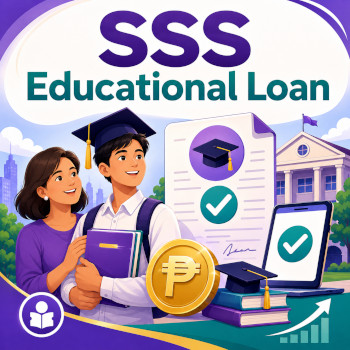 Table of Contents
The SSS Educational Assistance Loan Program is a member loan program designed to help qualified SSS members or their eligible beneficiaries pay for education.
It can be used for qualified college or vocational courses. The loan is based on the actual school fees shown in the Statement of Account from the educational institution.
In simple terms, the program helps cover school-related expenses, but the money is not treated like a general-purpose cash loan. SSS may pay the school directly based on the approved amount and the documents submitted.
| Item | Details |
|---|---|
| Official program name | Educational Assistance Loan Program |
| Common search term | SSS Educational Loan |
| Best for | College or vocational education expenses |
| Borrower | Qualified SSS member |
| Beneficiary | Member, child, legal spouse, or sibling of unmarried member, depending on eligibility |
| Loan amount | Based on school Statement of Account and program limits |
| Common limit mentioned by SSS | Up to ₱20,000 per semester for college |
| Interest | 6% per year, based on SSS public guidance |
| Payment start | Commonly described as 18 months after graduation |
| Application channel | SSS branch / official SSS process; check current availability with SSS |
| Official form | Available on the SSS website under Member Loans forms |
The SSS Educational Assistance Loan Program still appears on the official SSS website as a downloadable form under Member Loans. However, unlike Salary Loan or Calamity Loan, it is not always presented as a simple online loan product inside My.SSS.
For this reason, members should not assume that the process is fully online or automatically available to everyone. Before preparing documents, check with:
This matters because program availability, filing method, school participation, documentary requirements, and processing steps may change.
The borrower must be a qualified SSS member.
Based on commonly published SSS EALP conditions, the member-borrower should generally:
Older SSS EALP forms and public guides commonly mention the income limit of ₱25,000 or below and at least 36 posted monthly contributions, with 6 contributions posted within the last 12 months before application.
Because this is a high-stakes loan for education, always verify the latest requirements before relying on old copies of forms or third-party guides.
The student-beneficiary may be:
For siblings, the member’s civil status matters. Public SSS explanations state that if the member is already married, the member may not be able to use the loan for a sibling because the member already has a different family obligation.
Before applying for a sibling, confirm the rule directly with SSS.
The SSS Educational Loan is generally intended for higher education and vocational education.
It may apply to:
The course and school must be acceptable under SSS program rules. Do not assume that every school, training center, online course, or short certificate program is covered.
Before applying, ask the school if it can issue the required Statement of Account and if it is familiar with SSS EALP processing.
The loan amount depends on the school’s Statement of Account and the program limits.
A commonly stated limit for college is up to ₱20,000 per semester. This does not mean every student automatically receives ₱20,000. If the school’s Statement of Account is lower, the approved amount may be limited to the actual amount due.
Example:
The key rule is that the loan is tied to actual school charges, not to the amount the borrower wants to receive.
For the Educational Assistance Loan Program, SSS public guidance indicates that payment is made based on the school’s Statement of Account and may be paid directly to the educational institution.
This is different from the Salary Loan, where proceeds are released to the member’s disbursement account.
The practical result is simple: do not treat the SSS Educational Loan as cash for general household use. It is meant for school fees.
Public SSS guidance has described the Educational Assistance Loan Program as having 6% annual interest.
Repayment is commonly described as starting 18 months after graduation, giving the student time to finish studies and look for employment before repayment begins.
However, borrowers should verify the current repayment schedule before applying. Ask SSS:
The delayed repayment feature can help families manage cash flow, but it does not remove the obligation to pay.
Requirements may vary depending on current SSS rules, school documents, and borrower category.
Prepare the following:
The most important school document is the Statement of Account endorsed by the educational institution. This document shows the amount due and helps determine the loan amount.
Depending on the case, the student may need to provide:
Do not wait until the deadline to request documents from the school. Registrar and finance offices may need time to issue certified documents.
Before preparing documents, confirm that SSS is currently accepting Educational Assistance Loan Program applications.
Check:
This step prevents wasted time if the program has special filing windows, branch-based processing, or updated requirements.
Use the official form from the SSS website.
Official form: SSS Educational Assistance Loan Program form
Do not rely on forms from random websites. Third-party copies may be outdated or edited.
Before filing, check:
If you have a past-due Salary Loan, Calamity Loan, or other SSS loan, fix the issue first.
Check whether the beneficiary is allowed under the program.
The beneficiary may be the member, child, legal spouse, or sibling of an unmarried member, depending on the current rules.
Prepare proof of relationship early.
Ask the school for an official Statement of Account or billing document.
This document should show:
The loan amount will depend on the actual school charges and the program limit.
Fill out the form carefully.
Check:
Incomplete fields and missing signatures can delay processing.
The filing process may require branch submission or a specific SSS procedure. Check the current process before going to a branch.
Bring original documents and copies. If the school must certify or endorse the Statement of Account, complete that step first.
SSS may review:
Processing time may vary depending on the branch, school documents, and completeness of the application.
If approved, confirm how the loan proceeds will be released or paid to the school.
Ask for proof or confirmation of payment so the student’s account can be updated by the school.
Do not ignore repayment just because payment may start after graduation.
Save all loan documents and monitor:
These two loan types are often confused.
| Feature | SSS Educational Loan | SSS Salary Loan |
| Main purpose | Tuition and education expenses | General short-term cash needs |
| Loan basis | School Statement of Account and program limits | Monthly Salary Credits |
| Beneficiary | Member or eligible student-beneficiary | Member-borrower |
| Release | May be paid directly to school | Released to member’s account |
| Repayment start | Commonly after graduation grace period | Starts soon after approval |
| Best for | College or vocational education | Bills, emergency cash, personal expenses |
If you need money for tuition, EALP may be more relevant. If you need cash for general expenses, Salary Loan may be the correct product.
| Criteria | SSS Educational Loan | Private student loan |
| Provider | Social Security System | Bank, lender, school partner, financing company |
| Borrower | Qualified SSS member | Depends on lender |
| Cost | Government-backed program terms | Depends on lender |
| Loan amount | Based on school fees and program cap | Depends on lender rules |
| Release | Often school-based | May be paid to borrower or school |
| Main risk | Eligibility and availability limits | Higher fees or stricter repayment terms |
Private financing may be faster in some cases, but it can be more expensive. Always compare the total repayment amount, interest, fees, penalties, and repayment schedule.
An SSS Educational Loan application may be delayed or rejected if:
Before reapplying, identify the exact issue and correct it.
If you cannot use the SSS Educational Loan, check other options.
Possible alternatives include:
Start with lower-cost and official options before using high-cost short-term lenders.
The SSS Educational Loan is officially called the Educational Assistance Loan Program. It helps qualified SSS members pay for eligible education expenses of themselves or qualified beneficiaries.
The official form is available on the SSS website: SSS Educational Assistance Loan Program form.
The beneficiary may be the SSS member, the member’s child, legal spouse, or sibling of an unmarried member, depending on current SSS rules.
Public SSS guidance commonly mentions up to ₱20,000 per semester for college, based on the school’s Statement of Account and program limits.
No. The amount is based on actual school charges. If the Statement of Account is lower than the maximum limit, the approved amount may also be lower.
The SSS Educational Loan is tied to school fees and may be paid directly to the educational institution. Confirm the release process with SSS before applying.
Public SSS guidance has described the program with 6% annual interest. Confirm the latest rate with SSS before filing.
Repayment is commonly described as starting 18 months after graduation. Ask SSS for the current repayment schedule before applying.
Prepare the completed application form, valid ID, SSS details, proof of contributions, school Statement of Account, proof of relationship to the beneficiary, and other documents required by SSS.
OFW members may check eligibility with SSS if they meet the contribution, income, beneficiary, and document requirements. The filing process may differ depending on current SSS rules.
Unlike Salary Loan, the Educational Assistance Loan Program may not be a simple fully online application for all members. Check the official SSS website, My.SSS, or a branch for the current process.
A past-due SSS loan can affect eligibility. Settle or update existing loan obligations before applying.
It depends on whether the course and school are accepted under SSS program rules. Confirm with SSS and the school before applying.
Check school installment plans, scholarships, CHED-UniFAST programs, LGU educational assistance, Pag-IBIG Multi-Purpose Loan, SSS Salary Loan, cooperative loans, or licensed lenders.
Interest |
Loan amount |
Term |
Borrower age |
SEC registered |
||
|---|---|---|---|---|---|---|

|
APR 145%
|
₱500 — ₱20,000
|
from 3 to 6 months
|
22+ years
|
SEC Registration number: CS201953073., Certificate of Authority №1254
|
|

|
from 0%
|
₱1,000 — ₱50,000
|
up to 12 months
|
20 — 70 years
|
SEC Registration No. CS201908275 SEC Certificate of Authority No. 1324
|
|
|
APR 143% per year
|
₱1,000 — ₱20,000
|
from 61 to 183 days
|
22 — 70 years
|
Registration № CS201726430, CA №1181
|
|