Date of publication: 01.06.2026 . Author: ploan.ph
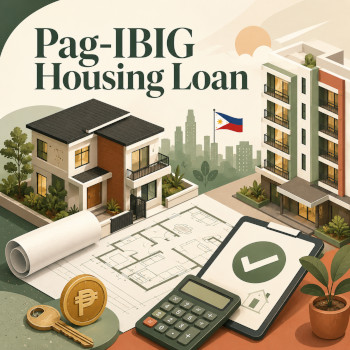 Table of Contents
A Pag-IBIG Housing Loan is a long-term loan offered by Pag-IBIG Fund to qualified members for residential property purposes.
It may be used for:
Pag-IBIG’s own public materials describe the housing loan as usable for residential lot purchase, house construction, home improvement, and other home financing purposes.
This is not a cash loan for general expenses. The loan proceeds are tied to the property transaction, construction, refinancing, or approved housing purpose.
.jpg)
| Item | Details |
|---|---|
| Loan type | Long-term housing finance |
| Main purpose | Buy, build, improve, or refinance a residential property |
| Borrower | Qualified Pag-IBIG member |
| Loan term | Up to 30 years, subject to borrower’s age and Pag-IBIG approval |
| Maximum maturity rule | Loan term must not go beyond the borrower reaching age 70 |
| Application channel | Virtual Pag-IBIG or Pag-IBIG branch |
| Basic online documents | Housing Loan Application Form, proof of income, valid ID, selfie photo |
| Collateral | Usually the same property being financed |
| Main approval factors | Eligibility, income, capacity to pay, property appraisal, documents, credit/background checks |
| Not the same as | Pag-IBIG Multi-Purpose Loan or Calamity Loan |
Pag-IBIG housing loans are usually repaid through monthly amortization. For employed borrowers, salary deduction may be used when feasible, but other payment channels are also available. Pag-IBIG guidelines state that monthly amortization can be paid through salary deduction, post-dated checks, accredited collection partners, auto-debit arrangements, or other collection systems implemented by the Fund.
A borrower must be a qualified Pag-IBIG member and must pass Pag-IBIG’s eligibility and loan evaluation.
In general, you should meet these conditions:
Pag-IBIG guidelines state that the borrower must have legal capacity to acquire and encumber real property, pass satisfactory checks, have updated existing housing accounts if applicable, and have no outstanding Pag-IBIG Short-Term Loan in arrears at the time of application.
The commonly stated minimum requirement for a Pag-IBIG Housing Loan is at least 24 monthly contributions or monthly savings.
Pag-IBIG’s public application guidance also mentions checking whether the applicant is an active member with at least 24 monthly contributions.
If you do not yet have 24 monthly contributions, ask Pag-IBIG whether lump-sum payment is allowed in your case. Some older and third-party guides mention lump-sum completion, but the safest approach is to verify the current rule before paying.
For Pag-IBIG housing financing, the borrower’s age matters because the loan is long-term.
The key rule is that the housing loan term may be up to 30 years, but it must not exceed the difference between age 70 and the borrower’s present age. Pag-IBIG guidelines also state that the principal borrower is considered 70 years old upon reaching the 70th birthday.
In practical terms:
The Pag-IBIG Housing Loan is for residential properties. It is not meant for commercial property speculation or general business use.
Eligible property purposes may include:
For residential lot purchase, Pag-IBIG materials note that the lot may be subject to area limits, such as a maximum of 1,000 square meters in some guidance.
The property must also be acceptable as collateral. Pag-IBIG guidelines state that the housing loan is secured by collateral acceptable to the Fund, usually the same residential property where the loan proceeds are applied.
Your Pag-IBIG Housing Loan amount is not based only on the selling price of the property.
Pag-IBIG will consider several factors:
In May 2026, several Philippine news outlets reported that Pag-IBIG raised its housing loan ceiling to ₱10 million, allowing qualified borrowers to access larger financing amounts, subject to evaluation and capacity to pay.
This does not mean every applicant can borrow ₱10 million. It means the ceiling is higher for qualified borrowers. Your approved loan may still be much lower if your income, age, appraisal value, or repayment capacity does not support the requested amount.
Suppose a condominium unit costs ₱3,000,000.
Pag-IBIG may still approve less than the full price if:
This is why buyers should not rely only on the developer’s sample computation. Use the Pag-IBIG calculator as a guide, but wait for Pag-IBIG’s actual assessment before treating the loan as final.
Pag-IBIG housing loan interest rates depend on the loan program, loan type, and repricing or fixing period.
For regular housing loans, 2026 reports mention market rates starting as low as 5.75%, depending on the chosen fixing period.
For socialized housing and qualified borrowers under government housing programs, Pag-IBIG has maintained a subsidized 3% annual interest rate under the Expanded 4PH program. Government reports in 2026 state that qualified members may avail of the 3% subsidized rate for the first five years, extendible for another five years for eligible borrowers.
Before applying, always check the current Pag-IBIG rate table because housing loan rates can change. Your interest rate may also depend on the fixing period you select.
A fixing period is the period during which your interest rate stays the same.
For example, if you choose a 5-year fixing period, your rate is fixed for that period. After that, the loan may be repriced based on Pag-IBIG’s prevailing rates and rules.
A shorter fixing period can have a lower starting rate, but your payment may change sooner. A longer fixing period can give more payment stability, but the initial rate may be higher.
This choice matters because a housing loan can last 10, 20, or 30 years. A small difference in interest rate can change your monthly payment and total interest cost.
Pag-IBIG housing loans may be repaid over a maximum term of 30 years, subject to the borrower’s age and approval. The term must not go beyond the borrower reaching age 70.
A longer term reduces the monthly payment but increases the total period of debt. A shorter term increases the monthly payment but may reduce total interest.
For most borrowers, the right term is not simply the longest or shortest one. It should match monthly income, household expenses, job stability, and future plans.
Your monthly amortization depends on:
Pag-IBIG guidelines state that monthly amortization should cover principal, interest, and insurance premiums over the loan term.
Do not compare only the property price. A ₱3 million property can have very different monthly payments depending on the rate, term, and approved amount.
For online housing loan application, Virtual Pag-IBIG asks applicants to prepare:
These are the basic starting documents. Additional property documents are usually required depending on the loan purpose.
Prepare the following:
Virtual Pag-IBIG lists acceptable income documents for locally employed borrowers, including any of the following:
For government employees, Virtual Pag-IBIG notes that a certified one-month payslip within the last three months must be submitted together with CEC or ITR.
For self-employed borrowers, income documents may include:
These are listed under Virtual Pag-IBIG’s proof of income guidance for self-employed applicants.
For OFWs, acceptable documents may include:
Virtual Pag-IBIG also notes that documents in foreign languages require English translation.
Property documents depend on your loan purpose.
For property purchase, construction, or refinancing, Pag-IBIG may require documents such as:
The exact checklist can vary, so do not rely on a generic list alone. Use the checklist for your specific loan purpose and property type.
Virtual Pag-IBIG allows users to start a housing loan application by selecting the loan purpose and entering the 12-digit Pag-IBIG MID number.
Before choosing a property, check:
Do this before paying a large reservation fee.
Use the Pag-IBIG Housing Loan Affordability Calculator to estimate how much you may borrow. Treat the result as a guide, not as approval. The calculator states that actual loanable amount may vary after Pag-IBIG evaluation.
The application should match your real purpose:
Selecting the wrong purpose can lead to document problems and delays.
Prepare:
Ask the seller, developer, broker, or contractor for the property-specific documents. Check if the title, tax declaration, and permits are clean and complete.
Do not assume that a property is acceptable to Pag-IBIG just because it is being sold as “Pag-IBIG ready.”
Submit the application online if your situation and documents fit the Virtual Pag-IBIG process. If your case is complex, a branch visit may be better.
Complex cases may include:
Pag-IBIG will review the borrower and the property.
The evaluation may include:
If approved, Pag-IBIG may issue approval documents such as a Notice of Approval or Letter of Guaranty, depending on the transaction.
Read all conditions carefully. Approval may still require compliance with additional documents, insurance, mortgage registration, taxes, or other requirements before final release.
Before takeout or release, there may be additional steps, such as:
Pag-IBIG guidelines state that borrowers pay processing and appraisal fees for each housing loan availment.
Monthly amortization generally starts after takeout or according to the loan documents. Pag-IBIG guidelines state that payment of monthly amortization starts in the month immediately following the takeout date, and continues monthly until full settlement.
Set reminders early. A housing loan is a long-term obligation, and missed payments can become serious.
Pag-IBIG guidelines state that any unpaid portion of the amount due after the due date is charged a penalty of 1/20 of 1% for every day of delay. Payments are applied first to penalties, then insurance premiums, then interest, then principal.
A borrower may be considered in default after failing to pay three monthly amortizations, failing to submit proof of payment of real estate taxes, or violating loan obligations. At default, the outstanding obligation may become due and demandable, and foreclosure or cancellation procedures may follow.
This is why the monthly payment should be realistic, not just technically approvable.
Pag-IBIG guidelines allow borrowers to prepay a housing loan in full or in part without prepayment penalty, subject to applicable service fees. Excess payments may be treated as advance amortization, or applied to principal upon request if conditions are met.
For borrowers with extra income, principal prepayment can reduce long-term interest cost. But you need to make sure the payment is properly applied.
A co-borrower can help improve borrowing capacity, but it also creates responsibility.
Pag-IBIG guidelines state that co-borrowers must pass eligibility requirements and are jointly and severally liable for the housing loan obligation.
This means a co-borrower is not just a name added to increase the loan amount. They share legal responsibility for repayment.
Before adding a co-borrower, discuss:
A Pag-IBIG Housing Loan is not always automatically better than a bank loan. It depends on your income, property, preferred term, and approval profile.
| Criteria | Pag-IBIG Housing Loan | Bank housing loan |
|---|---|---|
| Best for | Pag-IBIG members, long terms, socialized or affordable housing, workers wanting government-backed financing | Borrowers with strong income, faster bank processing, preferred bank relationship |
| Maximum term | Up to 30 years, subject to age and approval | Varies by bank |
| Interest | Depends on fixing period; socialized housing may have subsidized rates | Depends on bank and fixing period |
| Approval basis | Membership, contributions, income, appraisal, documents, credit/background checks | Income, credit profile, property appraisal, bank rules |
| Property | Must be acceptable to Pag-IBIG | Must be acceptable to bank |
| Main risk | Processing delays if documents or property records are incomplete | Higher income requirements or stricter bank criteria |
If you qualify for both, compare:
Applications can be delayed or rejected because of borrower issues, property issues, or seller/developer issues.
Common borrower-related reasons:
Common property-related reasons:
Common process-related reasons:
Do not make these mistakes:
Before submitting a Pag-IBIG Housing Loan application, check:
A Pag-IBIG Housing Loan is a long-term home financing loan for qualified Pag-IBIG members. It can be used to buy, build, improve, or refinance a residential property.
Qualified Pag-IBIG members with enough contributions, acceptable age, legal capacity to own real estate, stable income, satisfactory checks, and updated Pag-IBIG loan records may apply.
The commonly stated requirement is at least 24 monthly contributions. Pag-IBIG public guidance also refers to checking whether the applicant is an active member with at least 24 monthly contributions.
Your loan amount depends on your income, capacity to pay, property appraisal, loan purpose, age, loan term, and Pag-IBIG rules. In 2026, Pag-IBIG reportedly raised the housing loan ceiling to ₱10 million for qualified borrowers, but approval is still subject to evaluation.
For regular housing loans, 2026 reports mention rates starting as low as 5.75%, depending on the fixing period. For qualified socialized housing borrowers under Expanded 4PH, Pag-IBIG has maintained a subsidized 3% annual interest rate for the first five years, extendible for another five years for eligible borrowers.
The loan term may be up to 30 years, but it must not go beyond the borrower reaching age 70.
Yes, OFWs may apply if they are qualified Pag-IBIG members and can submit acceptable proof of income and other requirements. Virtual Pag-IBIG lists OFW income documents such as employment contracts, POEA standard contracts, CEC, and host-country tax returns where applicable.
Yes. Virtual Pag-IBIG allows applicants to start a housing loan application by choosing the loan purpose and entering the 12-digit Pag-IBIG MID number.
Basic online requirements include the Housing Loan Application Form, proof of income, one valid ID with signature, and a selfie photo showing the ID card. Additional property documents depend on the loan purpose.
No. Pag-IBIG’s calculator is for reference only. The actual loanable amount may vary after Pag-IBIG validation and evaluation.
Yes, home improvement or renovation can be an eligible purpose, subject to Pag-IBIG rules, property documents, and approval.
Late payments may incur penalties. Pag-IBIG guidelines state that unpaid amounts after the due date are charged a penalty of 1/20 of 1% for every day of delay, and default may occur after failure to pay three monthly amortizations.
Yes. Pag-IBIG guidelines allow full or partial prepayment without prepayment penalty, subject to applicable service fees and proper application of payments.
Not always. Pag-IBIG may be better for long terms, socialized housing, and qualified members who prefer government-backed financing. A bank loan may be better for some borrowers with strong income, preferred bank relationships, or faster processing needs. Compare rates, fees, fixing period, total repayment, and approval timeline before deciding.
Interest |
Loan amount |
Term |
Borrower age |
SEC registered |
||
|---|---|---|---|---|---|---|

|
APR 145%
|
₱500 — ₱20,000
|
from 3 to 6 months
|
22+ years
|
SEC Registration number: CS201953073., Certificate of Authority №1254
|
|

|
from 0%
|
₱1,000 — ₱50,000
|
up to 12 months
|
20 — 70 years
|
SEC Registration No. CS201908275 SEC Certificate of Authority No. 1324
|
|

|
APR 182%
|
₱1,000 — ₱30,000
|
from 61 days to 364 months
|
21 — 70 years
|
SEC Registration No. 2021030009095-02 Certificate of Authority No. 3427
|
|